


“Squints at the board”
Myopia in children
Your child sees distance blurry and near clearly. The doctor measures the minus with drops, chooses glasses and says when to come back.
We’ll show who treats it and what it costs.
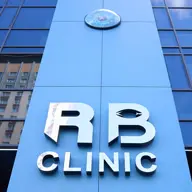
12 Orynbor St. Look for the blue façade with the eye sign.
BABY EYE CLINIC · paediatric ophthalmologist in Astana
At BABY EYE CLINIC we see children from birth. While vision is still developing, almost everything is easier to correct than in adults. Tick what you’ve noticed, and we’ll show you what it might be and what the doctor will do.
What have you noticed in your child
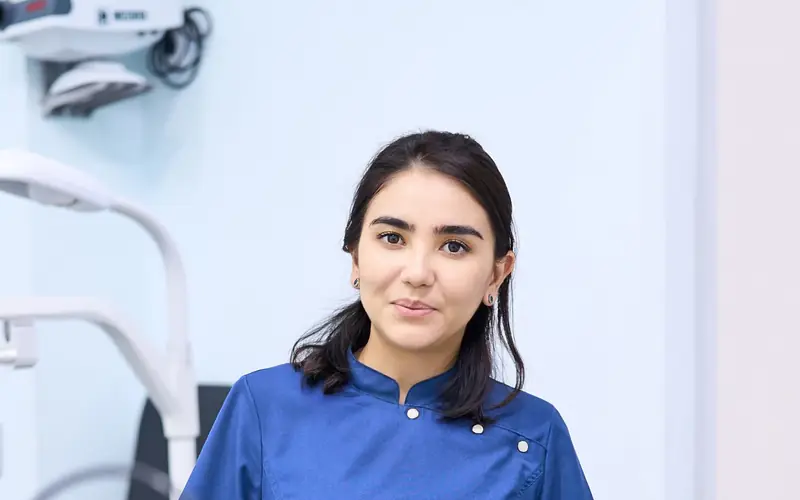
No injections, no cutting: pictures, no-touch devices, drops. At the end the doctor explains to you how the eyes are doing.
Tick the signs, and we’ll show you what it might be.
What it is. Distance is blurry, close up is fine. It often starts at school: the board, books, the phone.
What we’ll do. An exact figure with drops, glasses, and a date for the next check so the minus doesn’t creep up unnoticed.
More about myopiaWhat it is. The eye bends light unevenly: some lines are sharp, some blurred — both far and near.
What we’ll do. Measure how much and along which axis, and choose glasses for that axis.
More about astigmatismWhat it is. The eye has to strain, especially up close: hence the tiredness and eye-rubbing. A small plus in little ones is normal.
What we’ll do. With drops we see the true plus. If it’s above the norm for their age, we’ll choose glasses.
More about hyperopiaWhat it is. The eyes don’t look at the same point — all the time or when the child is tired.
What we’ll do. Find the cause: often the right glasses straighten the eyes. If not, training on special devices. Surgery is needed only when medically indicated, and Dr. Bigeldiyev performs it at RB CLINIC.
More about strabismusWhat it is. The eye is healthy, but the brain has got used to not using it — vision doesn’t improve even with glasses.
What we’ll do. Glasses and patching the strong eye for set hours — so the weak one starts working. It works best in childhood.
More about amblyopia, “lazy eye”What it is. At school they look at one chart. It won’t tell you why a child sees worse or whether both eyes see equally.
What we’ll do. Pictures, devices, the back of the eye and how the eyes work together. If all is well, we’ll say so.
More about a routine check-upWhat it is. Different reflections can come from the camera angle. But if one pupil is white or glows differently time after time, don’t wait for a routine check-up.
What we’ll do. Examine the back of the eye through a dilated pupil. Bring those photos with you.
No injections, no cutting: pictures, no-touch devices, drops. At the end the doctor explains to you how the eyes are doing.
Tick the signs, and we’ll show you what it might be.
Schoolchildren aged 7–12 — a chart, no-touch devices and drops for an exact figure. At the end the doctor will say whether glasses are needed.
Honestly about what parents fear
What’s scary isn’t what the doctor might find. It’s what might not be found in time. A child’s eye grows and learns to see along with them, which is why myopia, strabismus and “lazy eye” are corrected precisely in childhood. Like braces: teeth are straightened while the jaw is growing, not at forty.
Amblyopia, when the brain “switches off” the weaker eye, is treated with glasses and by patching the stronger eye — and it works best in childhood. In adults the same treatment helps much less. A check-up doesn’t harm anything: it shows whether there’s anything to correct.
Babies are shown a toy and a light, preschoolers pictures instead of letters, and the devices look into the eye without touching it. The least pleasant part is the drops: they sting for a couple of seconds, then everything is blurry for a while. You stay with your child the whole visit.
They give a growing eye a clear picture and take away extra strain. For how long depends on the cause: hyperopia often lessens as the eye grows, myopia usually stays.
Check-up calendar
The first time — before age one, even if nothing seems wrong. Then before nursery, before school, and once a year during school. Children rarely complain about their vision: they have nothing to compare it with, and a blurry board is simply the board to them.
Whether the gaze follows a toy, how the pupils respond to light, whether the eyes are straight. Your baby doesn’t need to do anything — the doctor does the looking.
Pictures instead of letters: we see whether both eyes see equally. This is when a “lazy eye” is most often found — at the best time to treat it.
The workload will multiply. We check distance and near vision and how the eyes work together, so that in first grade your child sees the board instead of guessing.
Reading, the board, the phone: these are the years myopia most often begins. Once a year — so you see it if the minus starts going up, not two school years later.
Recognised even one? Tick it at the top of the page. We’ll show what it might be and send it to the doctor as a ready-made message. Back to the signs
The parent’s words → the doctor’s word
The same “squinting” can have three different causes. That’s why the doctor first finds the cause, and only then talks about glasses and treatment. Below is how it sounds from parents and what a paediatric ophthalmologist does.
“Squints at the board”
Your child sees distance blurry and near clearly. The doctor measures the minus with drops, chooses glasses and says when to come back.
“Letters swim, tilts their head”
The eye bends light unevenly, so some lines are blurred both far and near. The child squints and tires quickly. The doctor measures how much and along which axis, and chooses glasses for exactly that axis.
“Tires of books, rubs their eyes”
The eye has to strain all the time, especially up close. A small plus in little ones is normal, and it often lessens as the eye grows. With drops the doctor sees the true figure and says whether glasses are needed.
“By evening one eye drifts”
Childhood strabismus can be corrected, especially if you start early. The cause is often a plus or a minus, and the right glasses alone can straighten the eyes. If not, training on special devices. For most children this is enough, and if surgery is medically needed, Dr. Bigeldiyev performs it at RB CLINIC.
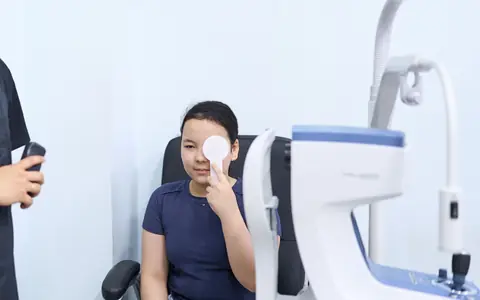
“Sees worse with one eye”
The eye is healthy, but the brain has got used to taking the picture from the other one. The main treatment is glasses and occlusion: the strong eye is patched for a few hours a day, and the weak one starts to work. The doctor decides how many hours.
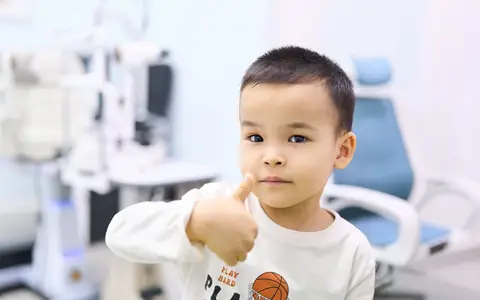
“School sent a referral”
The school chart tells you how many lines are visible, but not why. A paediatric ophthalmologist checks each eye’s vision, refraction, the back of the eye and how the eyes work together. If all is well, they’ll say so.
Your baby’s eye is watery and there is pus in the corner — this happens with dacryocystitis in newborns. The eyelid margin is red and flaky — it looks like blepharitis in children. Both also start with an exam by a paediatric ophthalmologist.
No surprises
The visit is built around your child, not around the devices. Children are seen at BABY EYE CLINIC, 2A Syganak St. First the doctor talks with you, then comes a picture game, no-touch devices and drops. At the end you get not a printout but an explanation: how the eyes are and what to do next.
What you noticed and when, who in the family wears glasses or has a squint. If you ticked signs on the website, the doctor already knows what you’ve come about.
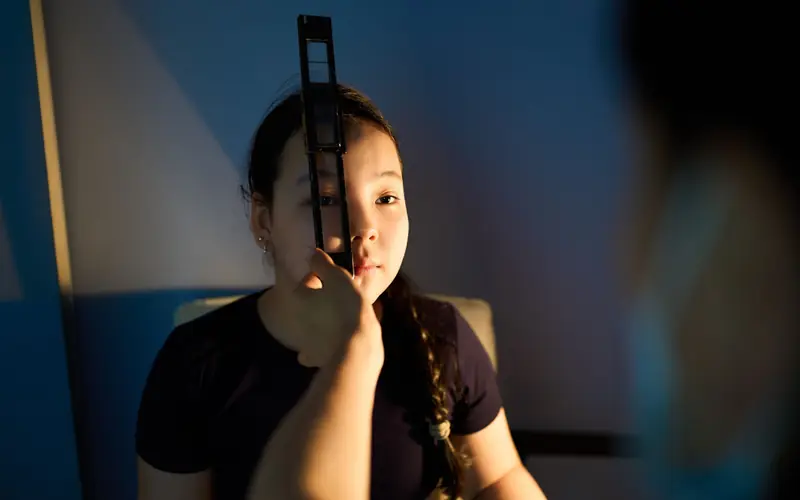
Babies get a toy and a light, preschoolers a house, a star and a car instead of letters, schoolchildren a chart. Each eye separately, far and near.
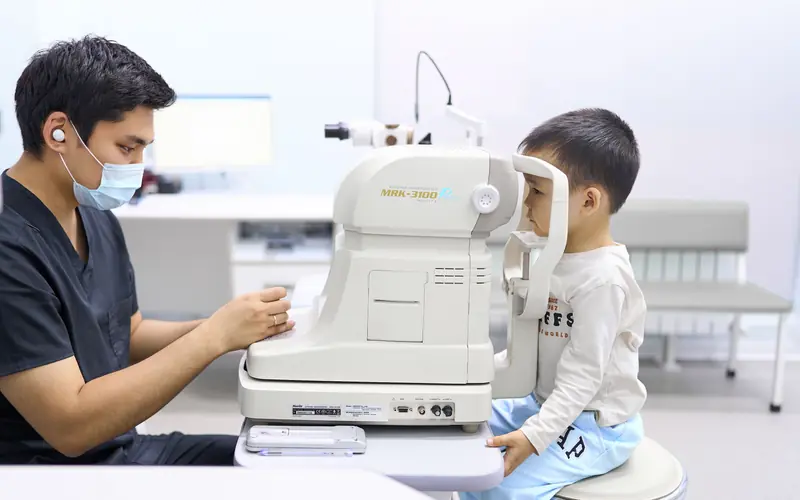
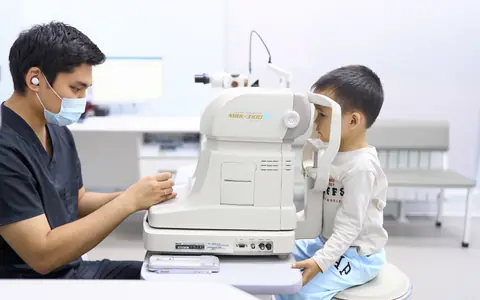
Your child looks at a picture in a little window, and the device works out the minus, plus and astigmatism by itself. The doctor checks how the eyes move and whether they work together.
A child’s eye can hide its true figure. Drops relax that strain and dilate the pupil — so the glasses prescription comes out accurate, and the doctor can see the retina and the optic nerve.
What was found, whether glasses are needed and which ones, when to come back. If all is well, the doctor says so, without any “just in case”.
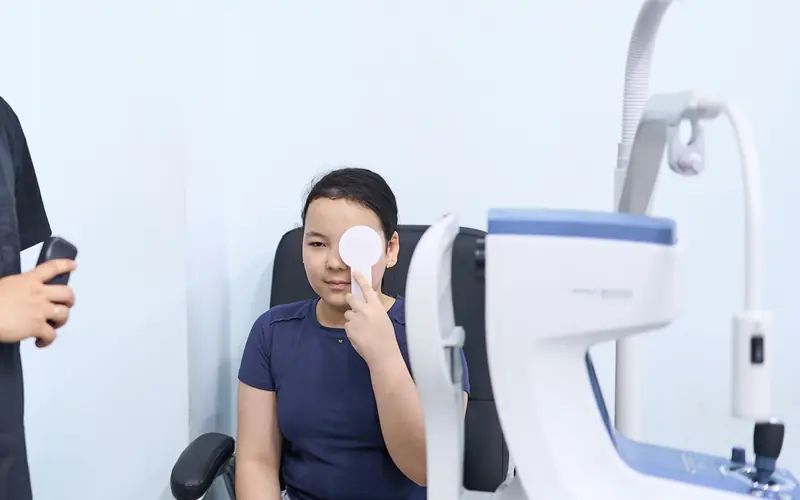
Play “doctor” at home: cover one eye with a hand and name the picture. Don’t promise “nothing will happen” — tell the truth: they’ll put in drops, it’ll sting a little, and then everything will go funny and blurry.
What your child will see
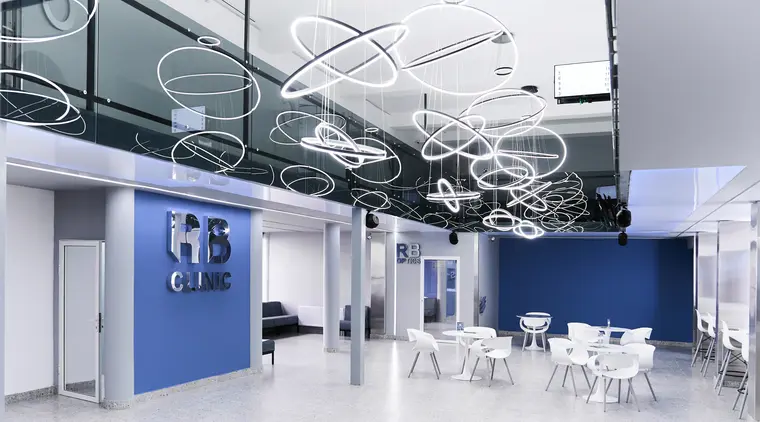
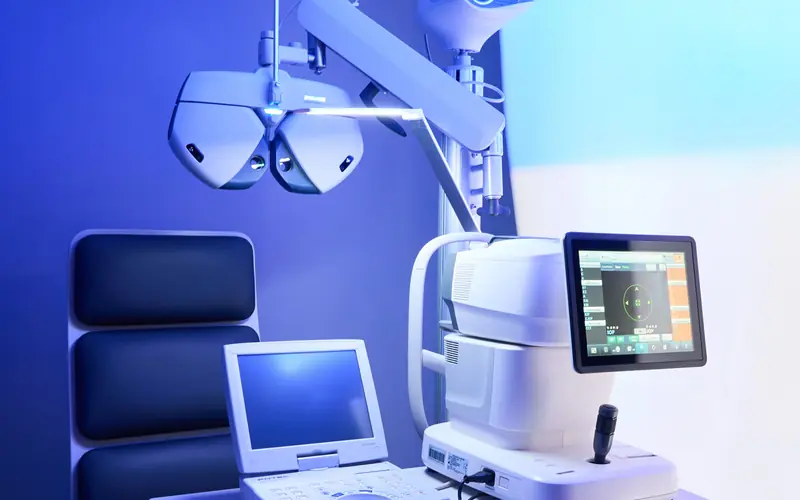
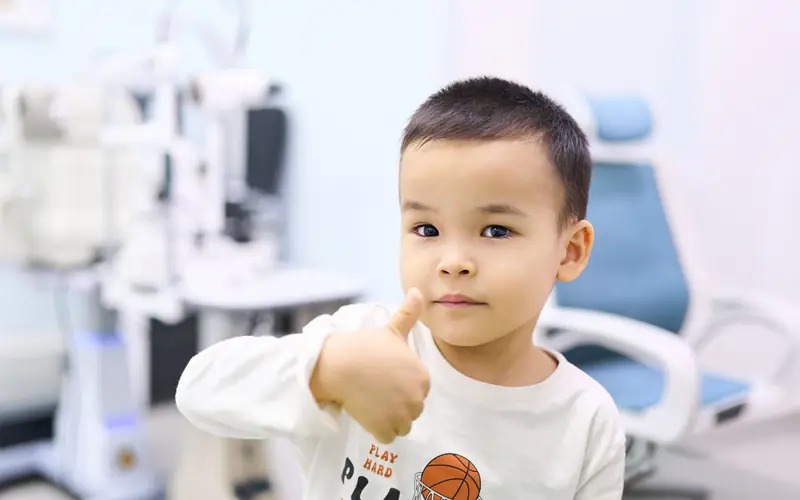
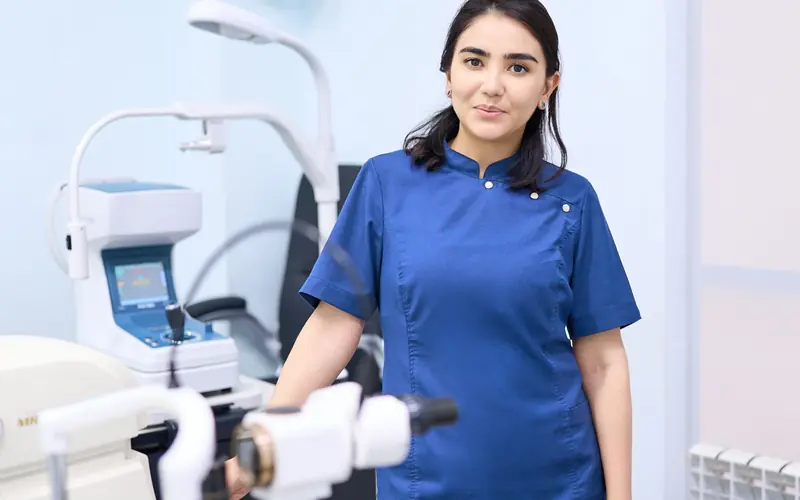
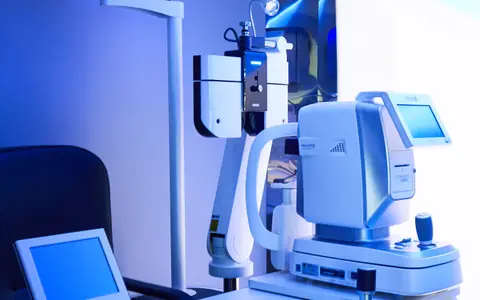
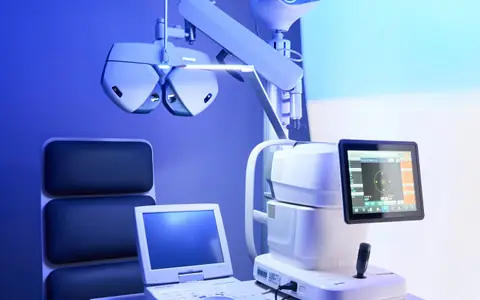
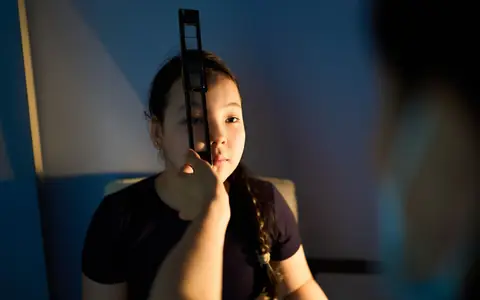
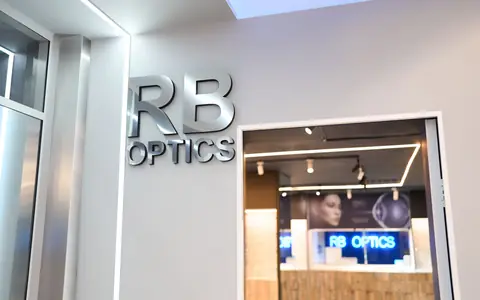
Show these photos to your child at home — the unfamiliar is less scary once you’ve seen it. The shots with children and Dr. Begaidarova were taken at BABY EYE CLINIC, 2A Syganak St: this is where your child is seen. The rest are RB CLINIC at 12 Orynbor St: diagnostics, the RB OPTICS store and the clinic lobby, where you come for glasses. Drag the strip or tap a photo.

A doctor explains
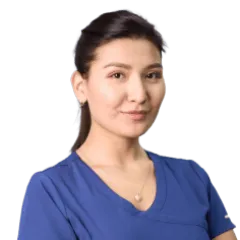
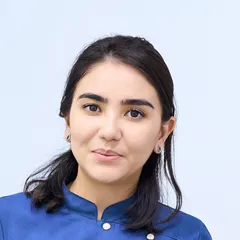
Begaidarova Aliya Kairgeldinovna · paediatric ophthalmologist, BABY EYE CLINIC
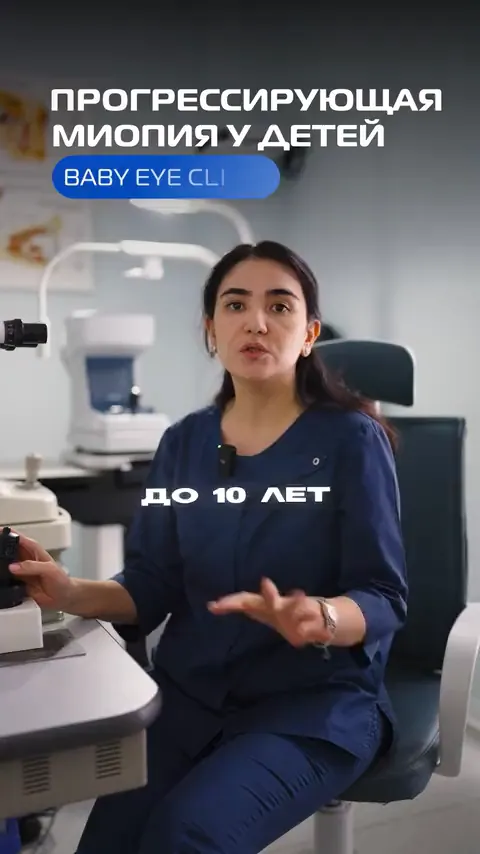
“Vision used to get worse at 13–14, in the teenage years. Now, unfortunately, myopia progresses even before school age.”
“In this case the child must be seen twice a year without fail.”
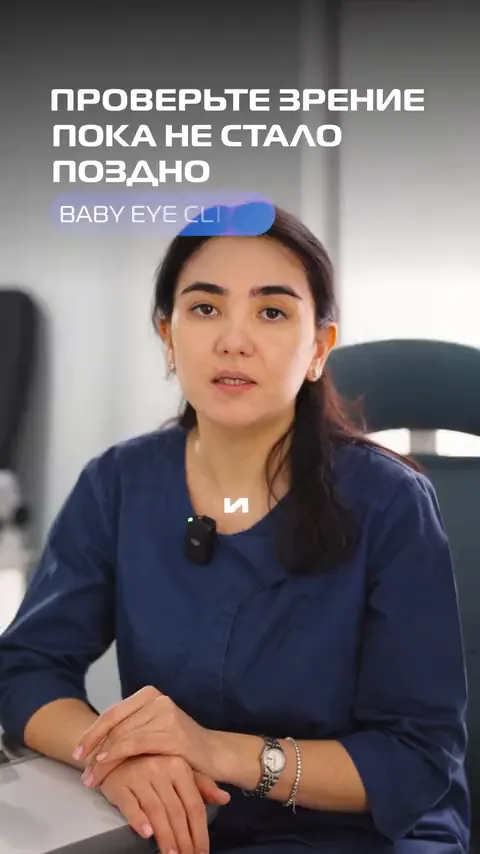
“No pain, no redness, no squint. You simply don’t see this problem until you check the vision.”
“And if this problem isn’t dealt with before age 7, the vision, unfortunately, may not come back.”
“If you can’t see a puncture from an insect bite, please rush to an ophthalmologist straight away, without delay.”
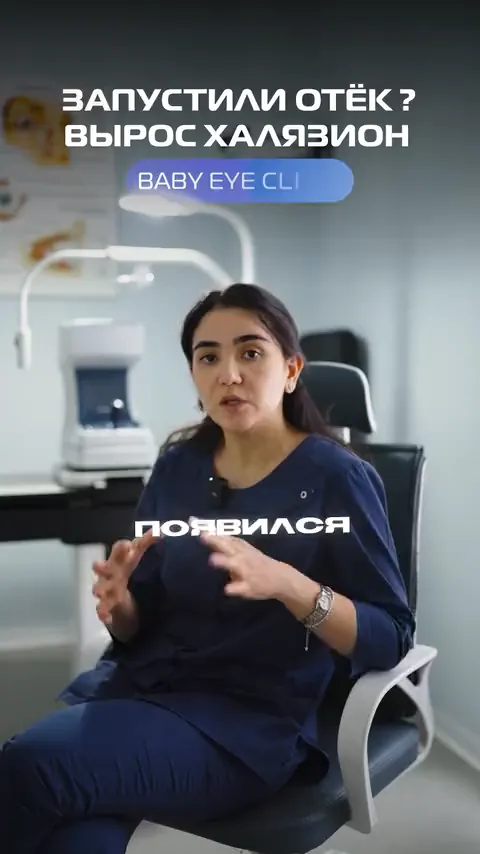
“If the swelling is in its first days, we prescribe drops and ointments, and it simply goes down, that’s it.”
The doctor’s words from the video, translated word for word. Tap the video to listen with sound.
BABY EYE CLINIC children’s doctor
Your child is seen by a paediatric ophthalmologist, not a nurse with a chart. At BABY EYE CLINIC that’s Dr. Begaidarova: parents mention her by name in 55 of 117 reviews. Few children need surgery. If it’s medically needed, the founder of RB CLINIC will perform it — no need to look for a surgeon all over again.
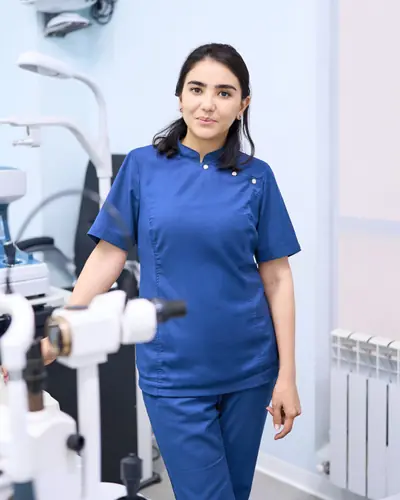
Paediatric ophthalmologist, BABY EYE CLINIC
Parents mention her by name in 55 of 117 reviews. Sees children at 2A Syganak St.
Prescription at BABY EYE, frames at RB OPTICS
The prescription is written by the BABY EYE doctor after the drops — so the figures in it are accurate. Glasses are then fitted at the RB OPTICS store in the RB CLINIC building at 12 Orynbor St. Your child picks the frames they’ll want to wear — and glasses they like don’t get “forgotten” at home.
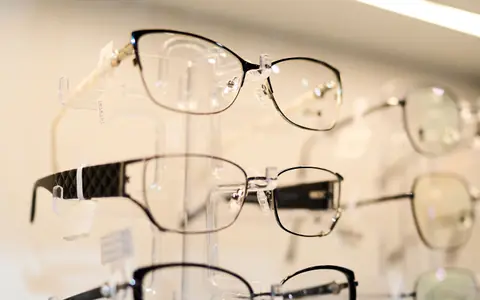
Backed by RB CLINIC
Most children only need glasses, lenses, training on devices or simply monitoring. The doctor will suggest surgery only when it is medically needed — for strabismus, ptosis or blocked tear ducts. Then RB CLINIC surgeons perform it: BABY EYE CLINIC is the children’s branch of RB CLINIC, a leading eye microsurgery centre in Astana.
When medically needed:
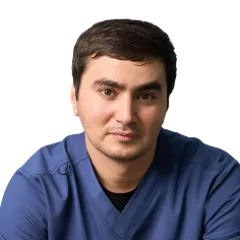
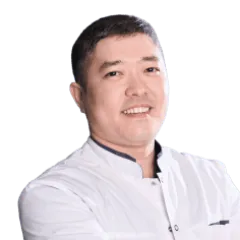
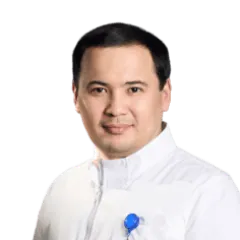 Bigeldiyev Rishat Kalilullaevich
Founder of RB CLINIC, Academician. If a child needs strabismus surgery, he performs it himself
About Dr. Bigeldiyev
Bigeldiyev Rishat Kalilullaevich
Founder of RB CLINIC, Academician. If a child needs strabismus surgery, he performs it himself
About Dr. Bigeldiyev
One visit
Write your child’s age and what you’ve noticed, and the administrator will find a time. If you ticked signs at the top of the page, they’ll already be in the message. Visits are at BABY EYE CLINIC, 2A Syganak St, Mon–Sat 11:00–18:00, by appointment.
If everything is fine, we’ll tell you so.
Call BABY EYE: +7 771 833 00 03 · Mon–Sat 11:00–18:00
Surgery questions — RB CLINIC: +7 771 848 00 00
Questions
The first check-up is recommended before age one, even if nothing seems wrong. Then before nursery, before school, and once a year during school. Don’t wait for a routine check-up if your child squints, has a turning eye, tilts their head, rubs their eyes, or one pupil glows differently in flash photos.
No. Visual acuity is checked with pictures or a chart, and the devices don’t touch the eye. The least pleasant part is the drops: they sting for a couple of seconds, then for a while everything is blurry and light is dazzling. A parent stays with the child the whole visit.
A child’s eye can adjust its focus by itself and hide the true minus or plus. Drops relax that strain and dilate the pupil: the glasses prescription comes out accurate, and the doctor can see the back of the eye. After the drops daylight is dazzling — bring sunglasses for your child.
No, glasses don’t “weaken” eyesight. They give the eye a clear picture and take away extra strain while the eye is growing. How long glasses are needed depends on the cause: hyperopia often lessens as the eye grows, myopia usually stays.
Childhood strabismus can be corrected, especially if you start early. First the doctor looks for the cause: often it’s a plus or a minus, and well-chosen glasses alone can straighten the eyes. If one eye has become “lazy”, it’s trained by patching the strong eye. For most children this is enough. Surgery is needed only when medically indicated — then Dr. Bigeldiyev performs it at RB CLINIC.
Amblyopia, or “lazy eye”, is when the eye is healthy but the brain has got used to not using it, and vision doesn’t improve even with glasses. The main treatment is glasses and occlusion: the strong eye is covered with a special patch for a few hours a day, and the weak one starts to work. The doctor decides how many hours. Amblyopia is best treated in childhood.
Laser correction is done from 18; the doctor decides on exceptions. Until then the eye is growing and the figure changes. For a child: glasses or lenses, and a check-up once a year so the minus doesn’t grow unnoticed.
We’ll confirm the price of a children’s visit on WhatsApp. Write your child’s age and what you’ve noticed, and a visit time will be found right away.
Children are seen at BABY EYE CLINIC, the children’s branch of RB CLINIC: 2A Syganak St, Astana, Mon–Sat 11:00–18:00, by appointment. Glasses to the BABY EYE doctor’s prescription are fitted at the RB OPTICS store at 12 Orynbor St. If surgery is medically needed, RB CLINIC surgeons perform it there too.
Yes, it is the same doctor: “oculist” is the everyday word, “ophthalmologist” is the name of the specialty. For a children’s eye doctor in Astana, go to BABY EYE CLINIC, the children’s branch of RB CLINIC at 2A Syganak St. Children are seen there from birth, mostly by Dr. Begaidarova.
Children’s visits: BABY EYE CLINIC, 2A Syganak St, Astana · Glasses and surgery when needed: RB CLINIC, 12 Orynbor St · BABY EYE: +7 771 833 00 03 · RB CLINIC: +7 771 848 00 00 · All reviews