









1
An exact number with drops
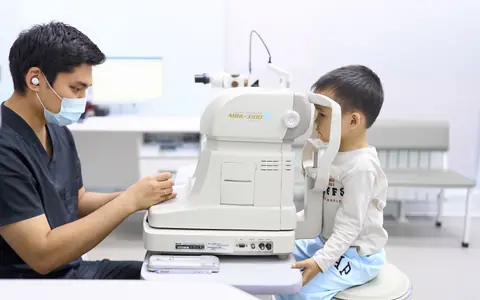
A child’s eye can adjust its own focus and hide the true number. Drops relax that effort: a no-touch device measures the cylinder and axis, and the prescription comes out accurate.
We’ll show who treats it and what it costs.
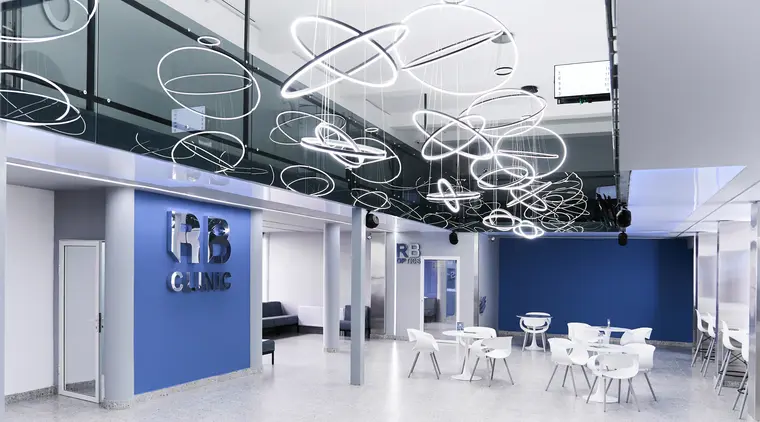
12 Orynbor St. Look for the blue façade with the eye sign.
On your child’s prescription — cyl · ax
In children, astigmatism is corrected with glasses, not a laser. The hurry is with the glasses: up to age 7–8 the eye is learning to see clearly. Enter the number from the prescription — and we’ll show how your child sees the board.
 Seen by Dr. Begaidarova, BABY EYE CLINIC
How your child sees
This is an illustration. How your child actually sees will show up in a check with drops.
This is how a child with cyl 1.75 sees the board without glasses. They don’t complain: they have nothing to compare with. And the copying mistakes aren’t down to inattention.
Age 6–8: the window is still open. Up to age 7–8 vision learns fastest — don’t put the check off until the end of the school year.
An honest look at what parents fear
Astigmatism in children isn’t frightening if the child sees clearly every day. What’s frightening is astigmatism left uncorrected for years: the brain gets used to a blurred picture. It’s like learning to write with a crooked pen — the hand adapts, and relearning takes longer later.
Without glasses a child with astigmatism squints, tilts their head, mixes up similar letters and numbers and tires of books quickly. From the outside it looks like inattention. Glasses matched to the axis give an even picture, and lessons stop being hard work for the eyes.
If one eye sees a blurred picture for years, the brain stops using it — this is amblyopia. It’s treated with glasses and patching the stronger eye, and it works best in childhood. That’s why the doctor asks for glasses to be worn all day, not just in lessons.
A child’s eye is still growing, and the number on the prescription can change. Laser correction is done from 18, once the number is stable. Glasses don’t “ruin” eyesight: they give the eye a clear picture while it learns to see.
Why not wait
The brain learns to see clearly the way it learns to talk: most easily in early childhood. The eye of a child with astigmatism sends a blurred picture to the brain. If it isn’t corrected with glasses before age 7–8, the brain may never learn to see with that eye at full strength — even when glasses are put on later.
In babies mild astigmatism can be normal and often goes away by itself by age 2–3. The doctor checks whether it’s decreasing and will tell you if it’s time for glasses.
Full-time glasses in these years give the brain what it was missing — a clear picture every day. The earlier they go on, the more time the eye has to learn.
Glasses still give a clear view of the board and ease tiredness. If one eye has become “lazy”, it’s treated, but it takes longer than in a small child. The prescription is rechecked as the child grows.
The eye has finished growing and the number no longer changes. Glasses or lenses are now chosen as for an adult.
A check doesn’t harm anything and doesn’t commit you to anything. It shows whether there’s something to correct now — while time is working for your child, not against them. Enter the number from the prescription
What happens after the check
Treating astigmatism in a child isn’t a procedure but a habit of seeing clearly. The doctor measures the cylinder and axis precisely, fits glasses to them and watches the eye as it grows. Like braces: they work as long as they’re worn.
A child’s eye can adjust its own focus and hide the true number. Drops relax that effort: a no-touch device measures the cylinder and axis, and the prescription comes out accurate.
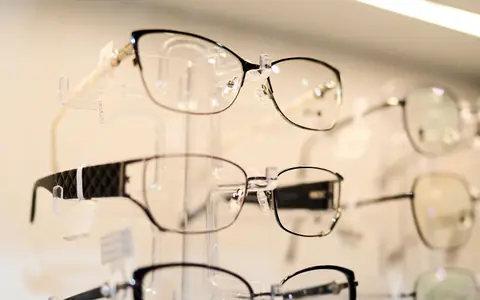
Cylindrical lenses are set strictly to the axis on the prescription — that’s how lines become even in every direction. Children usually need to wear them all day: the doctor will tell you exactly how.
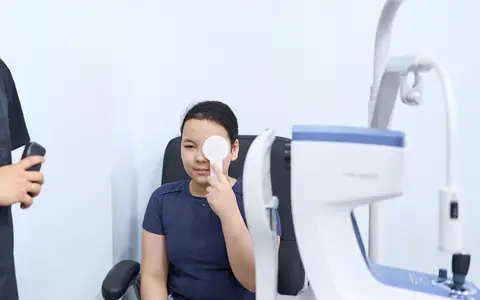
When one eye sees worse even in glasses, occlusion is added: the stronger eye is patched for a few hours a day, and the weaker one starts working. The doctor decides how many hours.
A child’s eye grows, and sometimes the prescription needs changing. The doctor will tell you when to come back: they’ll check how your child sees in glasses and whether both eyes work equally.
Line by line
Astigmatism on a prescription is two columns: cyl and ax. The first says how unevenly the eye bends light, the second — in which direction. Tap an eye below — the picture above will show how it sees without glasses.
An example, not a prescription. Enter your child’s numbers in the picture above.
The child may not complain but tires from long reading and drawing.
Noticeably affects both distance and near vision. Correction with glasses is needed.
Seriously reduces vision. Glasses and a doctor’s monitoring are essential.
A mild degree doesn’t mean “no need to wear them”. Whether glasses are needed, the doctor decides by how your child sees with each eye, not by a single number.
It’s not your fault
Most often astigmatism in children is simply the shape of the eye the child was born with. It wasn’t caused by screen time, and you didn’t miss it through inattention. What matters isn’t where it came from, but that the eye sees clearly while it’s learning.
If mum or dad has astigmatism, a child is noticeably more likely to have it. It may show up right after birth or in the first years.
In children born early the visual system matures more slowly, and refractive errors, astigmatism included, are more common.
A blow, inflammation or another eye disease can change the shape of the cornea. This is called acquired astigmatism.
In infants mild astigmatism can be normal and often goes away by itself by age 2–3. If it doesn’t, or if it’s high, correction is needed.
Phones and tablets don’t cause astigmatism, but a blurry picture tires a child’s eyes faster on a screen. The first paediatric ophthalmologist check-up is before age one, then before kindergarten, before school and once a year, even if nothing seems wrong.
What your child will see
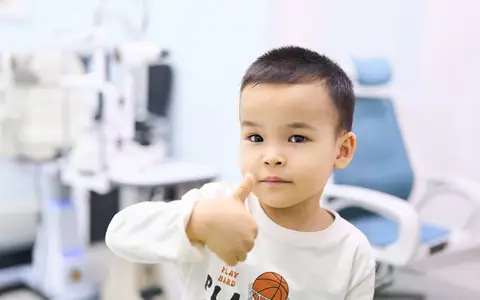
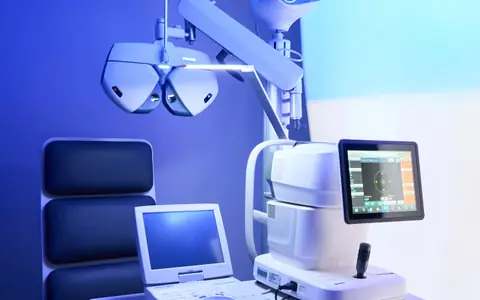
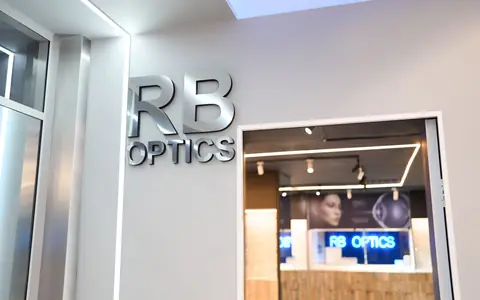
Show your child these photos at home — the unfamiliar is less scary once it’s been seen. The devices that measure astigmatism don’t touch the eye: the child looks at a picture in a little window. The photos with children were taken at BABY EYE CLINIC, 2A Syganak St: that’s where your child will be seen. The exam rooms, the RB OPTICS store and the lobby are RB CLINIC at 12 Orynbor St: come here for prescription glasses. Drag the strip or tap a photo.

A doctor explains
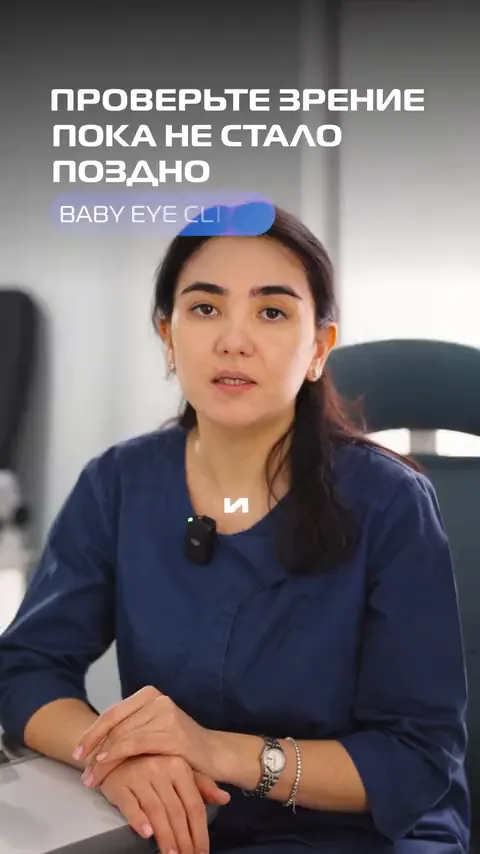
Begaidarova Aliya Kairgeldinovna · paediatric ophthalmologist, BABY EYE CLINIC
“No pain, no redness, no squint. You absolutely can’t see this problem until you have the vision checked.”
“And if this problem isn’t dealt with before age 7, the vision, unfortunately, may not come back.”
The doctor’s words from the video — verbatim. Tap the video to listen with sound.
BABY EYE CLINIC paediatric doctor
A child’s prescription is written by a paediatric ophthalmologist, not a machine in an optician’s. At BABY EYE CLINIC that’s Dr. Begaidarova: parents mention her by name in 55 of 117 reviews. She’ll explain what each number means and how to wear the glasses, and tell you when to come back.
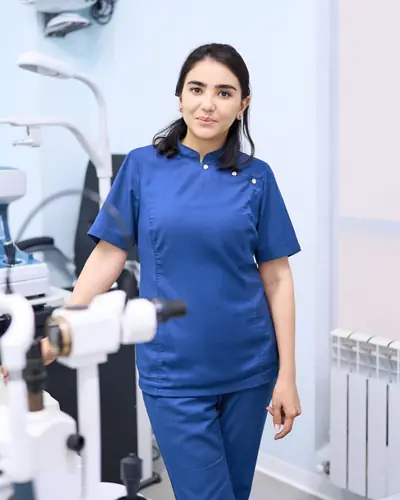
Paediatric ophthalmologist, BABY EYE CLINIC
Parents mention her by name in 55 of 117 reviews. At the appointment she’ll go through the prescription with you line by line — you’ll leave with no questions left.
Appointments at BABY EYE CLINIC, 2A Syganak St — Mon–Sat 11:00–18:00, by appointment. We’ll find a time on WhatsApp.
Prescription at BABY EYE, glasses at RB OPTICS
With astigmatism the axis matters: a lens turned a few degrees the wrong way gives worse vision. That’s why glasses are made strictly to the BABY EYE CLINIC doctor’s prescription at RB OPTICS, the optician’s inside RB CLINIC at 12 Orynbor St. Your child picks the frame, and glasses they like don’t get “forgotten” at home.
Other children’s pages: paediatric ophthalmology · myopia in children · hyperopia in children · strabismus
Backed by RB CLINIC
Most children do fine with glasses, contact lenses, training on eye devices or simply monitoring. The doctor will only suggest surgery when there’s a medical need — for a squint, ptosis or blocked tear ducts. Then it’s done by RB CLINIC surgeons: BABY EYE CLINIC is the children’s branch of RB CLINIC, a leading eye microsurgery centre in Astana.
When medically needed:
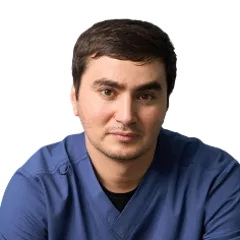
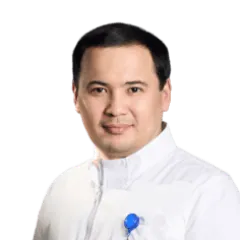 Bigeldiyev Rishat Kalilullaevich
Founder of RB CLINIC, academician. If a child needs strabismus surgery, he performs it
About Dr. Bigeldiyev
Bigeldiyev Rishat Kalilullaevich
Founder of RB CLINIC, academician. If a child needs strabismus surgery, he performs it
About Dr. Bigeldiyev
One visit
Your child will be seen at BABY EYE CLINIC, 2A Syganak St. Tell us your child’s age and what’s on the prescription — the administrator will find a time. If you entered the number in the picture above, it will already be in the message.
Bring previous glasses and prescriptions.
Call BABY EYE: +7 771 833 00 03 · Mon–Sat 11:00–18:00
Surgery questions — RB CLINIC: +7 771 848 00 00
Questions
Astigmatism is the shape of the cornea or lens, and glasses don’t change it. Treating astigmatism in children means giving the eye a clear picture with full-time glasses while vision develops, and watching the number as the child grows. If one eye has become “lazy”, patching of the stronger eye is added.
Children with astigmatism are usually prescribed glasses for the whole day: the brain only learns to see clearly when it gets a clear picture all the time. Glasses “just for the board” give a picture that’s sometimes clear, sometimes blurred. How your child should wear them, the doctor will say after the check.
Up to age 7–8 a child’s vision learns fastest. If one or both eyes see a blurred picture in these years, the brain may get used to it and amblyopia — “lazy eye” — develops. It can be treated later too, but it works best in childhood.
In babies up to age 2–3 mild astigmatism can be normal and often goes away by itself. If it hasn’t decreased by then, or if it’s high, it usually stays. The number can change while the eye grows, so the prescription is rechecked rather than written once for all the school years.
No, RB CLINIC does laser correction from 18: a child’s eye is still growing and the number changes. Surgical treatment of astigmatism in children is a rare exception.
The child squints or tilts their head when looking, as if searching for a position where things look sharper. They tire quickly from reading and drawing, rub their eyes, hold a book very close or far away. They mix up similar letters and numbers. The child usually doesn’t complain about their sight: they have nothing to compare with.
The first paediatric ophthalmologist check-up is before age one, then before kindergarten, before school and once a year, even if nothing seems wrong. For a child who wears glasses, the doctor sets the next check-up date: the eye keeps growing, so the prescription sometimes needs to change.
Glasses fitting at RB CLINIC costs 10,000 ₸ per fitting. We’ll confirm the price of a BABY EYE CLINIC appointment on WhatsApp: tell us your child’s age and what’s on the prescription — and we’ll find a time straight away.
Children’s appointments: BABY EYE CLINIC, Astana, 2A Syganak St · Prescription glasses: RB OPTICS at RB CLINIC, 12 Orynbor St · BABY EYE: +7 771 833 00 03 · RB CLINIC: +7 771 848 00 00 · All reviews