









High plus, squint
Glasses all the time
With a plus over +3.0 glasses are worn all day: this guards against a squint and amblyopia and lets vision develop normally. For toddlers — flexible frames on a strap that can survive being dropped.
We’ll show who treats it and what it costs.
12 Orynbor St. Look for the blue façade with the eye sign.
A plus in your child’s records · what to do about it
Babies are born with a plus, and that’s normal: the eye is still short and will grow. Set your child’s age and plus — we’ll show where it falls: normal, monitor, or glasses needed.
Normal plus by age
Glasses aren’t always needed: the doctor checks whether the eyes are straight, whether both see equally and whether your child tires with close work.
What the doctor will do. Measure the plus with drops, check each eye and for a squint — and tell you: glasses, or a check-up in a few months.
A guide based on age norms and paediatric ophthalmologists’ recommendations. The doctor decides after an examination with drops.
An honest look at what parents fear
Long-sighted doesn’t mean “only sees far away”. With hyperopia a child often sees both far and near — the eye pulls the focus in on its own, which is called accommodation. The price is constant strain. Like carrying a bag at arm’s length: you can manage, but by evening your arm is shaking.
With a mild or moderate plus a child reads but tires quickly, rubs their eyes and “doesn’t like books”. Reading glasses take that work off the eye — and handwriting practice stops being torture. School isn’t at risk here: patience is.
Until 6–7 the brain is learning to use both eyes. A high plus in these years can turn an eye towards the nose, and the brain may “switch it off” for good. Toddlers wear glasses on a soft strap quite happily: the world looks sharper with them than without.
The eye grows until school age, and the plus shrinks with it. Mild hyperopia often goes away on its own; high hyperopia stays — then glasses lower the risk of a squint and a “lazy eye”. Glasses don’t “weaken” eyesight.
The numbers in your child’s records
A newborn almost always sees with a plus. A baby’s eye is shorter than an adult’s, and the focus falls behind the retina. Doctors call this physiological hyperopia. Every year the eye gets longer, and by school age the plus has usually almost gone. That’s why “+2.5” is normal in a one-year-old but a reason to see a doctor in a seven-year-old.
| Age | Normal | Monitor | Most likely glasses | Glasses if there’s a squint |
|---|---|---|---|---|
| under 1 | up to +3.0 | +3.25 … +5.75 | from +6.0 | from +2.5 |
| 1 year | up to +2.5 | +2.75 … +4.75 | from +5.0 | from +2.0 |
| 2 years | up to +2.0 | +2.25 … +4.25 | from +4.5 | from +1.5 |
| 3 years | up to +1.75 | +2.0 … +3.25 | from +3.5 | from +1.5 |
| 4 years | up to +1.5 | +1.75 … +3.25 | from +3.5 | from +1.5 |
| 5 years | up to +1.25 | +1.5 … +2.75 | from +3.0 | from +1.5 |
| 6–17 years | up to +1.0 | +1.25 … +2.75 | from +3.0 | from +1.5 |
Figures in dioptres, measured with drops. This is a guide based on age norms and paediatric ophthalmologists’ recommendations — the doctor decides: they also look at each eye’s sharpness, any squint and how your child copes with close work.
Hyperopia up to 2 dioptres is usually normal in toddlers. For a schoolchild with good accommodation, glasses are needed only for close work and only if they get tired.
From 2.25 to 5 dioptres the doctor sets how to wear glasses: for lessons and reading, or all the time. Over +3.0 in a schoolchild — usually all the time.
Over 5 dioptres — glasses all the time and regular checks: a plus like this doesn’t go away on its own, and without glasses the risk of a squint and amblyopia grows.
Why a high plus shouldn’t be left alone
Accommodation and turning the eyes inwards are linked in the brain by one thread. To make out an object with a high plus, a child’s eye strains its focus hard — and with it the eyes turn in towards the nose. That’s how a convergent squint begins: first in the evening and over books, then all the time.
The good news: glasses alone often straighten the eyes. When the plus is fully corrected, focusing no longer needs to strain, and the eye moves back into place. If it doesn’t — exercises and patching. The doctor will suggest surgery only when medically needed, and then it’s done by RB CLINIC surgeon Dr. Bigeldiyev.
A difference between the eyes is more dangerous than the number itself. If one eye has a noticeably bigger plus, the child looks with the better eye and the other gets “lazy” — from the outside you can’t tell, the eyes look straight. It’s only found at an examination.
What we do and what we don’t promise
The plus itself only decreases as the eye grows. Glasses don’t “cure” the number; they take away the overload so the eyes grow straight and see equally. That’s why treating hyperopia in children means the right glasses at the right time and regular checks while the eye grows.
High plus, squint
With a plus over +3.0 glasses are worn all day: this guards against a squint and amblyopia and lets vision develop normally. For toddlers — flexible frames on a strap that can survive being dropped.
Mild and moderate plus
Up to +2.0 dioptres, if the eyes work well, glasses are often needed only for reading, writing and the tablet — if your child gets tired or has headaches. From +2.0 to +3.0 the doctor chooses how they’re worn.
If one eye is “lazy”
With amblyopia the stronger eye is covered with an occluder patch for a few hours a day, so the weaker one starts to work. How many hours and for how long is the doctor’s call. It works best before school age.
While the eye is growing
The plus changes, so the glasses are reviewed on the doctor’s schedule. That way the lenses always match an eye that is still growing.
No surprises
The key part of the visit is the drops. Without them the device shows only part of the plus, and the glasses come out weaker than needed. Everything else is pictures and devices that don’t touch the eye.
What plus was written before, whether your child tires with close work, whether an eye turns in by evening, who in the family wears glasses. If you marked the age and plus on the website, the doctor already knows what you’ve come with.
For toddlers — a toy and a light, for preschoolers — pictures instead of letters, for schoolchildren — a chart. Far and near, each eye separately: that’s how a difference between the eyes shows up.
The doctor checks whether the eyes are straight when your child looks into the distance and at a toy nearby. A convergent squint with a plus often shows only at near.
Drops relax accommodation and dilate the pupil — latent hyperopia becomes visible. After a while a no-touch device measures the full plus, and the doctor examines the back of the eye.
Normal, monitor or glasses — and which: all the time or for close work. When to come back. If the plus is normal, the doctor will say so.
Play “doctors” at home: cover one eye with a hand and name a picture. Be honest: they’ll put in drops, it’ll sting for a couple of seconds, then everything will go funny and blurry — and that passes.
BABY EYE CLINIC sees children from birth — 2A Syganak St, Mon–Sat 11:00–18:00, by appointment.
What your child will see
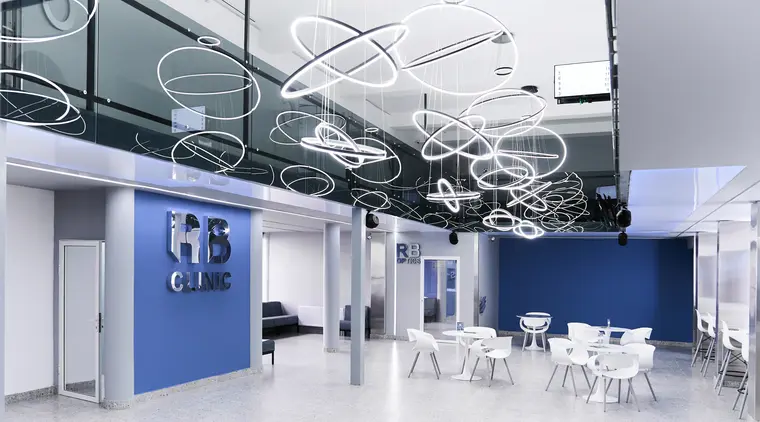
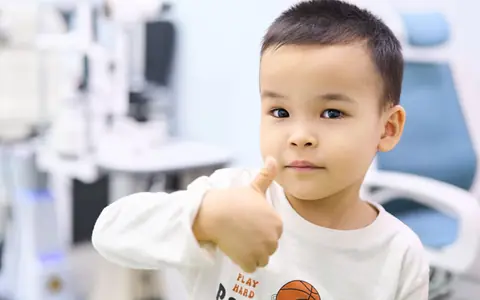
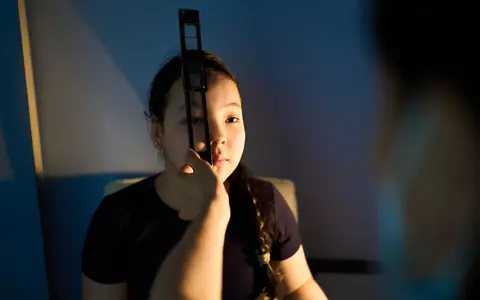
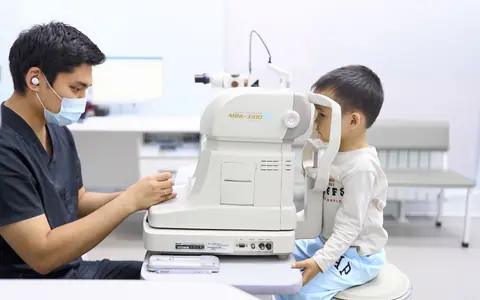
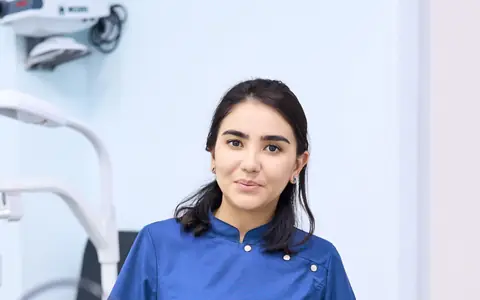
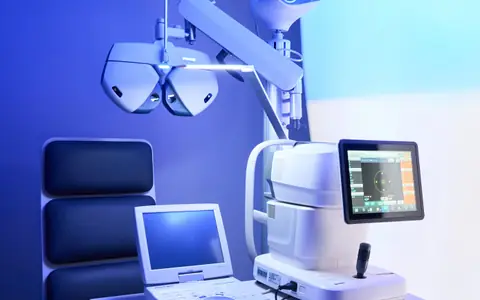
Show these photos to your child at home — the unfamiliar is less scary once you’ve seen it. The photos with children were taken at BABY EYE CLINIC, 2A Syganak St: this is where your child will be seen, and the devices don’t touch the eye. The rooms, the RB OPTICS store and the lobby are RB CLINIC at 12 Orynbor St: this is where you come for prescription glasses. Drag the strip or tap a photo.

A doctor explains
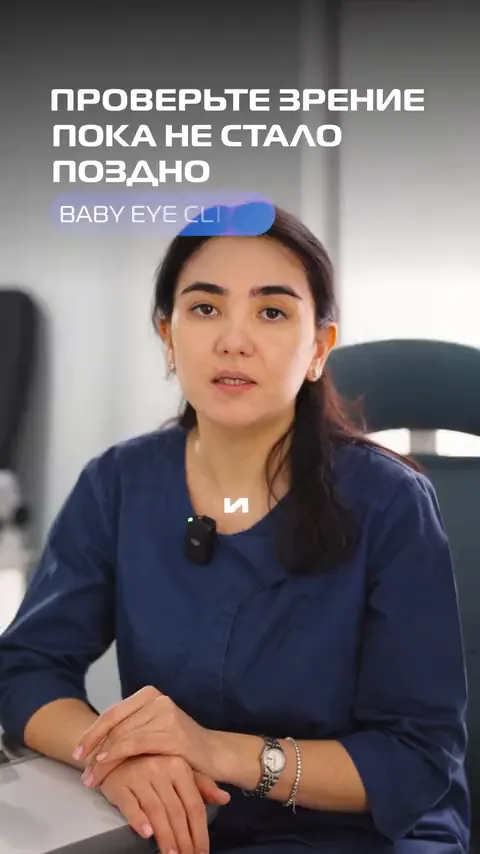
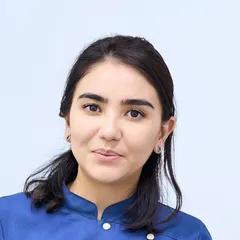
Begaidarova Aliya Kairgeldinovna · paediatric ophthalmologist, BABY EYE CLINIC
“No pain, no redness, no squint. You absolutely can’t see this problem until you have the vision checked.”
“And if this problem isn’t dealt with before age 7, the vision, unfortunately, may not come back.”
The doctor’s words from the video — verbatim. Tap the video to listen with sound.
BABY EYE CLINIC paediatric doctor
Your child’s plus is measured by a paediatric ophthalmologist, not an automatic machine in an optician’s. At BABY EYE CLINIC that’s Dr. Begaidarova: parents mention her by name in 55 of 117 reviews. She’ll explain the number and tell you when to come back. Most children with a plus do fine with glasses and monitoring. Surgery is rarely needed and only when medically indicated — for example, if glasses and exercises haven’t straightened a squint. Then it’s performed by the founder of RB CLINIC.
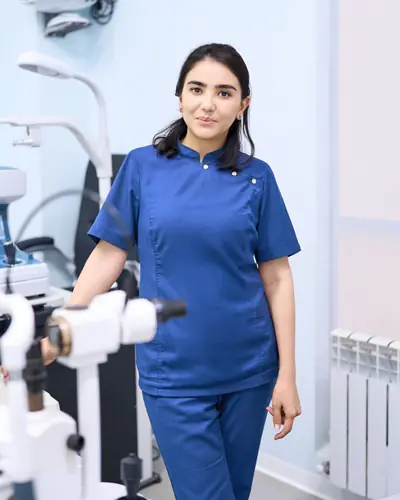
Paediatric ophthalmologist at BABY EYE CLINIC. Parents mention her by name in 55 of 117 reviews. She’ll explain what the number in the records means and when the glasses can come off.
Prescription at BABY EYE, glasses at RB OPTICS
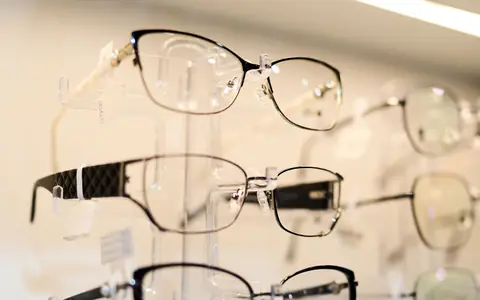
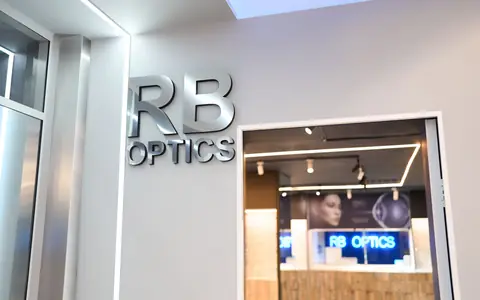
Glasses your child picked themselves don’t get “forgotten” at home. The prescription is written by a BABY EYE CLINIC doctor, and RB OPTICS makes the glasses from it: the store is inside RB CLINIC at 12 Orynbor St. No need to wonder whether some random optician read the plus correctly.
Backed by RB CLINIC
Most children do fine with glasses, contact lenses, training on eye devices or simply monitoring. The doctor will only suggest surgery when there’s a medical need — for a squint, ptosis or blocked tear ducts. Then it’s done by RB CLINIC surgeons: BABY EYE CLINIC is the children’s branch of RB CLINIC, a leading eye microsurgery centre in Astana.
When medically needed:
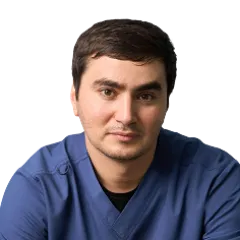
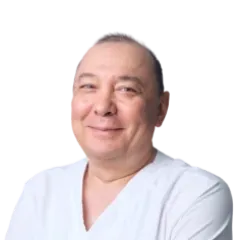
 Bigeldiyev Rishat Kalilullaevich
Founder of RB CLINIC, academician. If a child needs strabismus surgery, he performs it
About Dr. Bigeldiyev
Bigeldiyev Rishat Kalilullaevich
Founder of RB CLINIC, academician. If a child needs strabismus surgery, he performs it
About Dr. Bigeldiyev
One visit
Your child is seen at BABY EYE CLINIC, 2A Syganak St. Write the age and the plus from the records — the administrator will find a time. If you set them on the chart at the top of the page, they’ll already be in the message.
If the plus is normal — we’ll say so.
Call BABY EYE: +7 771 833 00 03 · Mon–Sat 11:00–18:00
Surgery questions — RB CLINIC: +7 771 848 00 00
Questions
Babies are born with a plus: the eye is short, and the plus shrinks as it grows — this is physiological hyperopia. A guide in dioptres for a figure measured with drops: under 1 — up to +3.0, at 1 — up to +2.5, at 2 — up to +2.0, at 4 — up to +1.5, from 6 — up to +1.0. Above normal doesn’t always mean glasses: the doctor also looks at each eye’s sharpness, any squint and how your child copes with close work.
With a plus over +3.0 dioptres glasses are usually worn all the time: that way the eyes don’t overstrain and a squint and amblyopia don’t develop. From +2.0 to +3.0 the doctor decides — most often glasses for lessons, reading and the computer. Up to +2.0 with good accommodation, glasses are needed only for close work, if your child gets tired or complains of headaches.
So the eyes learn to see properly. Until 6–7 the brain is learning to use both eyes, and a high plus in these years can turn an eye towards the nose or make it “lazy”. Glasses take the strain off focusing, and vision develops normally. Toddlers get flexible frames on a soft strap.
An age-related plus shrinks by itself as the eye grows — that’s why mild hyperopia in a toddler often doesn’t need glasses. If the plus comes from an eye that’s been short since birth, it won’t go away completely: then glasses lower the risk of a squint and a “lazy eye”.
To see clearly with high hyperopia, a child’s eye strains its accommodation hard, and with it the eyes turn in towards the nose. That’s how a convergent squint appears. Glasses with the full plus often straighten it by themselves. If not — exercises and patching. The doctor will suggest surgery only when medically needed, and then it’s done at RB CLINIC by Dr. Bigeldiyev.
A child’s eye can hide hyperopia: the focusing muscle strains and “swallows” part of the plus. Without drops the device shows less than there is, and the glasses come out too weak. Drops relax that muscle for a while — so the full number shows. After the drops everything is blurry for a while and light is dazzling, so bring sunglasses for your child.
Laser correction at RB CLINIC is done from age 18: until then the eye is growing and the plus is changing.
We’ll confirm the price of a BABY EYE CLINIC appointment on WhatsApp. Write your child’s age and the plus from the records — and we’ll find a time straight away.
Children’s appointments: BABY EYE CLINIC, Astana, 2A Syganak St · Prescription glasses: RB OPTICS at RB CLINIC, 12 Orynbor St · BABY EYE: +7 771 833 00 03 · RB CLINIC: +7 771 848 00 00 · All reviews